Netflix unblocked at school
A practical guide to understanding the legality, risks, and safer alternatives when considering Netflix access at school.

The decision to access Netflix at school is not as simple as pressing play. In most educational settings, streaming services like Netflix are restricted by district or school policies, network administrators, and even legal considerations. This article breaks down why these restrictions exist, what options students and educators have, and how to pursue legitimate, school-aligned viewing that supports learning objectives.
Reasons Netflix is blocked in schools
| Factor | Description | Impact on learning | Policy basis | Sources mention | Notes |
|---|---|---|---|---|---|
| Bandwidth use | Video streaming consumes significant bandwidth | Potential slowdowns | Policy/tech | yes | may affect other tools |
| Content age-appropriateness | Need to supervise content | Safety and curriculum alignment | Policy | yes | licensing concerns |
| Copyright/licensing | Licensing restrictions for education | Compliance required | Policy | yes | may restrict use |
| Network security | Risk of unverified apps/extensions | Security vulnerabilities | Policy | yes | controlled access preferred |
| Acceptable Use Policy (AUP) | District rules restrict streaming | Mandatory compliance | Policy | yes | varies by district |
| Alternatives available | Safer tools exist | Supports learning | Policy/availability | yes | prefer education platforms |
Compiled November 2026; check the provider's site for current details.
Why schools often block Netflix
Blocking Netflix at school isn’t about punishing students. It’s about managing resources and protecting the learning environment. Here are the core reasons:
- Bandwidth and network performance: Video streaming consumes significant bandwidth, which can slow down critical educational tools, online assessments, and collaborations.
- Content and age-appropriateness: Schools have a responsibility to supervise and curate content to align with curriculum standards and safety policies.
- Copyright and licensing: Educational use of media is governed by licenses. Streaming on school networks must adhere to terms of service and school district policies.
- Network security: Streaming platforms sometimes contribute to security risks, such as unverified apps or extensions that could expose devices to vulnerabilities.
- Policy and compliance: Districts publish acceptable use policies (AUP) that students and staff must follow. Streaming services may be restricted or prohibited.
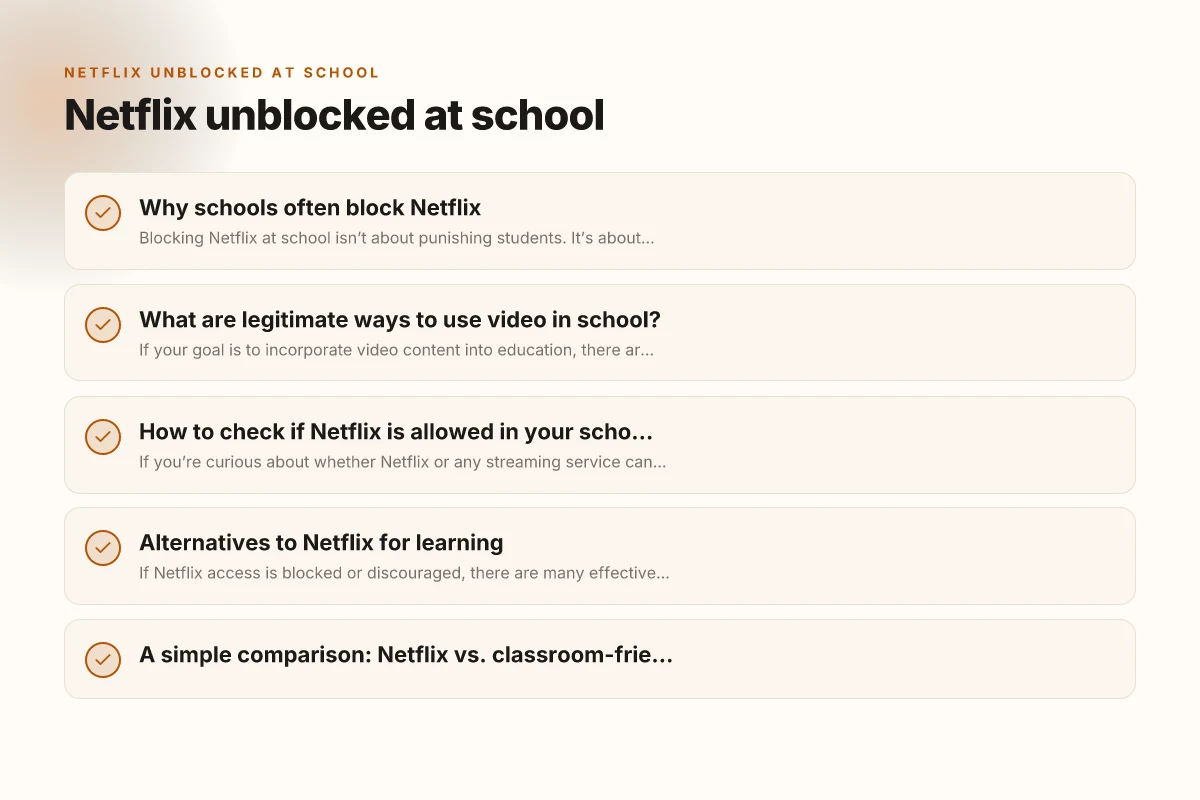
What are legitimate ways to use video in school?
If your goal is to incorporate video content into education, there are several approved pathways:
- District-approved streaming platforms: Many schools subscribe to educational video services like Discovery Education, Kanopy for Libraries, or Free2Learn. These platforms offer age-appropriate, curriculum-aligned content.
- Educational Netflix hands-off use: Some teachers may use Netflix in class only if explicitly approved by the district and used in a way that complies with licensing (for example, part of a broader lesson plan with teacher supervision and time limits).
- Teacher-curated playlists: Teachers can provide links to licensed, classroom-appropriate content hosted on school-approved platforms or where streaming is permitted by policy.
- Offline resources: Downloaded or distributed media via LMS (learning management systems) for offline viewing to avoid bandwidth issues and ensure control over content.
- Public library and classroom media: Many libraries provide streaming or download options for education that align with local policies.
Legitimate ways to use video in school
| Method | How it works | Typical platforms | Content control | Licensing/Compliance | Use case example |
|---|---|---|---|---|---|
| District-approved streaming | School subscribes to service | Discovery Education, Kanopy, Free2Learn | Yes | Licensed for school | Curriculum videos during class |
| Teacher-curated playlists | Links to licensed content | LMS hosting or school site | Yes | Licensing observed | Short clips for lesson |
| Offline resources | Downloaded media via LMS | Local copies, USB/ LMS | Yes | Controlled | Homework or offline viewing |
| Public library media | Library streaming options | Library-provided services | Yes | Library licenses | Ancillary videos |
| In-class screening with oversight | Supervised viewing window | Any permitted platform | Yes | Licensing aligned | Short, curriculum-linked clips |
Compiled November 2026; check the provider's site for current details.
How to check if Netflix is allowed in your school
If you’re curious about whether Netflix or any streaming service can be used in your educational environment, here are practical steps: TikTok unblocked at school: what you need to know and safer alternatives
- Review district policies: Look for acceptable use policies, digital citizenship guidelines, and streaming allowances.
- Talk to administrators: Contact the IT department or media specialist to understand current restrictions and any approved exceptions.
- Understand licensing terms: Netflix’s terms of service generally restrict school use unless specifically approved. Confirm with the district’s legal team if exceptions exist.
- Assess the purpose and duration: If an exception is possible, it should be clearly tied to a specific, time-limited educational objective and supervised.
- Document the plan: Keep a written plan that outlines objectives, safeguards, and assessment criteria in case audits or reviews occur.
Alternatives to Netflix for learning
If Netflix access is blocked or discouraged, there are many effective educational alternatives that can deliver similar value:
- Streaming platforms designed for classrooms
- Kanopy for Libraries: Free with many library cards. Curated educational films.
- Discovery Education: Curriculum-aligned streaming and multimedia resources.
- Amazon Inspire (where available): Teacher-created content and vetted videos.
- Public-domain and open educational resources
- OpenCourseWare, TVOKids, Internet Archive: Free, classroom-appropriate media.
- YouTube’s educational channels with strict content curation and teacher supervision.
- LMS-integrated video
- YouTube for Schools (restricted version with safety modes), within a controlled LMS environment.
- School-provided video repositories that can be streamed within the school network.
- Documentaries and teacher-created content
- Short clips from reputable science, history, or social studies channels embedded into lesson plans.
- Custom videos created by students as part of a project, hosted on the school’s network or LMS.
A simple comparison: Netflix vs. classroom-friendly video options
| Criterion | Netflix (general use) | Classroom-friendly video platforms | Notes |
|---|---|---|---|
| Licensing | Personal, household licenses | Institutional licenses or library licenses | Always verify terms for education use. |
| Content curation | Broad, not curriculum-focused by default | Curated for curriculum and age-appropriateness | Favor platforms aligned with standards. |
| Bandwidth impact | High when streaming | Moderate to low, with options for offline use | Plan around peak class times. |
| Safety and controls | Limited school controls | Strong content filters, age ratings, supervision | Essential for digital citizenship. |
| Accessibility | Global, with regional restrictions | Tailored for schools, with support | Check compatibility with devices used in class. |
Steps for teachers and students who want to explore legitimate options
If you’re a teacher or student who wants to use video for learning within policy, here’s a practical plan:
- Define the learning objective: What should students learn from the video? How will you measure learning outcomes?
- Choose approved platforms first: Start with district-approved or library-subscribed services.
- Plan for accessibility: Ensure content is accessible to all students, including captions and alternative formats where needed.
- Schedule and time-box viewing: Limit streaming to the minimal effective duration to avoid bandwidth bottlenecks.
- Include a safety and citizenship component: Discuss media literacy, source credibility, and digital citizenship in tandem with the video.
- Prepare backups: Have non-streaming options ready in case of technical issues (offline videos, readings, or interactive simulations).
How to approach a potential Netflix exception
If there’s a compelling educational case for using Netflix, here’s a careful approach to propose it:
- Build a documented case: Outline the learning objectives, how Netflix content supports them, and the expected outcomes.
- Propose limits and safeguards: Time limits, supervised viewing, and strict assignment-based usage.
- Seek formal approval: Present to the principal, IT director, and the district curriculum committee.
- Align with licensing: Confirm you’re not violating Netflix’s terms. Obtain written permission if an exception is possible.
- Collect feedback and adjust: After a trial, assess impact on learning and bandwidth. Be prepared to pivot to approved alternatives if issues arise.
How to check if Netflix is allowed in your school
| Step | Action | What to look for | Outcome if allowed | Outcome if not allowed | Tip |
|---|---|---|---|---|---|
| 1 | Review district policies | AUP, digital citizenship | Allowed or restricted | Restricted | Check policy summary |
| 2 | Talk to IT/Media specialist | Status of streaming services | Allowed with conditions | Not allowed or pending | Ask for exceptions process |
| 3 | Check licensing terms | School licenses | Compliant usage | Non-compliant | Verify license scope |
| 4 | Review acceptable platforms | List of approved services | Identify alternatives | None listed | Propose district-approved option |
| 5 | Test a supervised pilot | Teacher-led session | Clear permissions | Denied | Document outcomes |
Compiled November 2026; check the provider's site for current details. Instagram unblocked at school: safe ways to access and use it responsibly
Final recommendation
For most schools, Netflix should not be used as a primary classroom video source. Rely on district-approved platforms, library licenses, and institutionally hosted content that aligns with curriculum standards and safety policies. If Netflix is ever considered, it must go through formal approval with explicit safeguards and a well-defined educational objective. In practice, there are numerous high-quality, curriculum-friendly alternatives that deliver engaging, relevant content while respecting policy, bandwidth, and copyright requirements.
If you’re a student or educator aiming to use video content effectively, start with your school’s media specialist or IT department. They can point you to authorized resources, help you plan an instructional video strategy, and ensure that the content you use enhances learning without compromising school policies.