YouTube unblocked at school
Practical guide to understanding, navigating, and staying safe when YouTube is unblocked at school.

the article body in Markdown:
YouTube unblocked at school can feel like a double-edged sword: more learning opportunities, but also more distractions. This article dives into why schools block or allow YouTube, how to use it responsibly when it’s available, and what alternatives exist if it isn’t. The goal is to help students, teachers, and guardians understand the landscape and make the most of YouTube as an educational tool.
Why YouTube is sometimes blocked or unblocked at school
YouTube is a vast resource with tutorials, lectures, and demonstrations. However, schools also face concerns about productivity, inappropriate content, and bandwidth usage. Here are the main factors that influence whether YouTube is blocked or unblocked on a school network.
- Content filtering: Schools use filters to restrict non-educational content and maintain a safe browsing environment.
- Bandwidth management: Streaming video can consume a lot of bandwidth, potentially affecting others’ access.
- Student safety and age-appropriateness: Blocks may prevent exposure to harmful material.
- Educational policy and local regulations: Districts set rules aligned with curricula and safety standards.
- Teacher control and classroom needs: Some schools permit YouTube in classrooms with supervision and curated playlists.
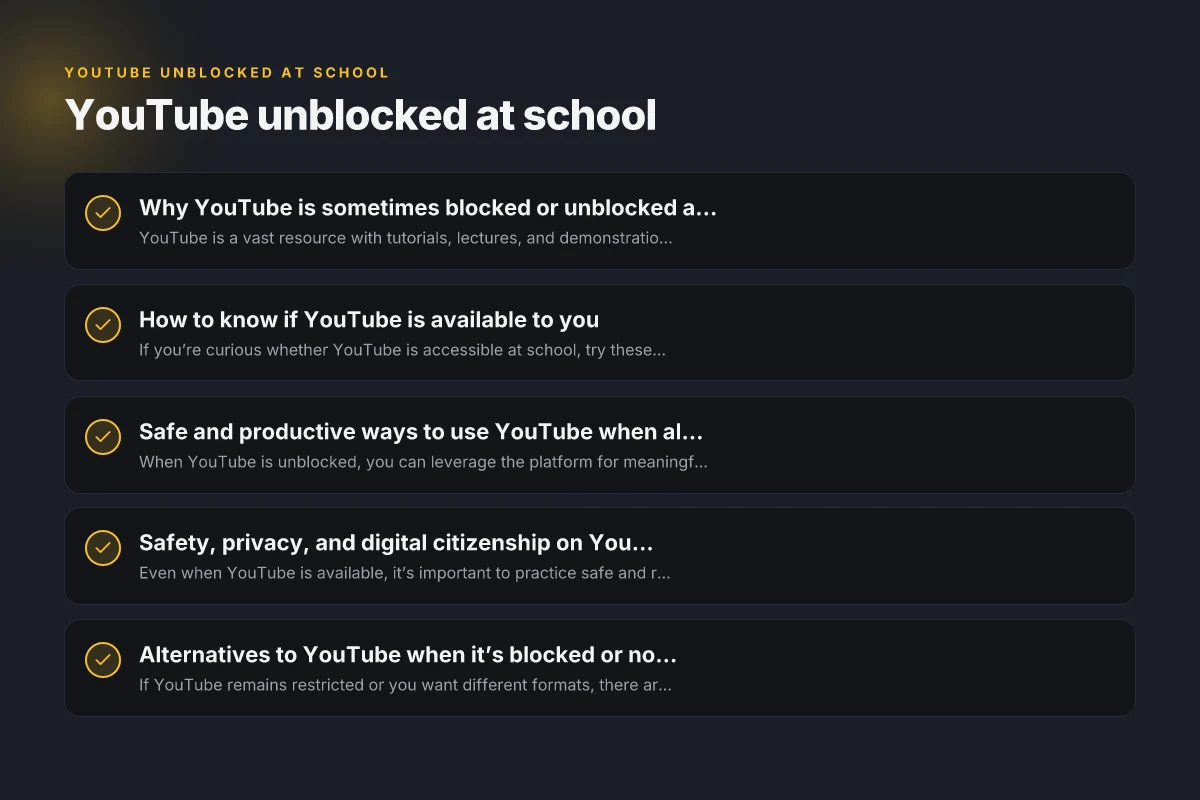
How to know if YouTube is available to you
If you’re curious whether YouTube is accessible at school, try these practical steps:
- Check the student or library computers: Look for the YouTube site or app and see if it loads.
- Ask a teacher or librarian: They can confirm current access status and any limits.
- Review the school’s digital policy: The policy often states which sites are allowed in classrooms and labs.
- Test with a simple video: A short, educational video is less likely to trigger restrictions if allowed.
If YouTube is blocked, don’t assume you’re out of luck. Understanding the rules sets you up for compliant use or alternatives.
Safe and productive ways to use YouTube when allowed
When YouTube is unblocked, you can leverage the platform for meaningful learning rather than mindless scrolling. Consider these approaches:
- Curated playlists: Teachers or students create playlists that align with lessons, minimizing off-topic content.
- Ad-free or restricted environments: Use YouTube in a supervised or classroom-safe mode if available.
- Subscriptions to educational channels: Channels that align with the curriculum can provide supplementary explanations.
- Short, focused videos: Choose videos under a few minutes to maintain attention and align with class activities.
- Closed captions and transcripts: Useful accessibility features that aid note-taking and comprehension.
Best practices for classroom use: How to unblock Coolmath Games at school
- Stay on topic: Only watch content relevant to the lesson.
- Respect copyright and licenses: Use official channels and avoid copyrighted material for distribution outside class.
- Mind data usage: Monitor bandwidth and avoid streaming during peak times unless necessary.
- Maintain a learning mindset: Use videos to reinforce concepts, not as a break or distraction.
Safety, privacy, and digital citizenship on YouTube
Even when YouTube is available, it’s important to practice safe and responsible behavior online.
- Respectful engagement: Avoid commenting with harassment or negativity. Encourage constructive discussion.
- Protect personal information: Don’t share addresses, phone numbers, or school details publicly.
- Privacy settings: Understand how to adjust recommendations and avoid sensitive content inadvertently.
- Avoid unsafe content: Learn to recognize thumbnails or titles that may indicate inappropriate material.
- Digital citizenship skills: Use YouTube to evaluate sources, cross-check facts, and cite videos properly.
A quick checklist for students:
- Is the video relevant and reliable?
- Can I quote or reference it with proper attribution?
- Am I staying on-topic and within time limits?
- Do I have a teacher’s permission to view or discuss the content?
Alternatives to YouTube when it’s blocked or not ideal
If YouTube remains restricted or you want different formats, there are solid alternatives that deliver similar educational benefits.
- Official educational platforms: Khan Academy, Coursera for Schools, Brilliant.org, and similar sites tailored for classrooms.
- Teacher-created video content: Teachers can upload or share approved videos through school-approved platforms (LMS, Google Classroom, Microsoft Teams).
- Podcasts and audio lectures: Audio-only formats reduce bandwidth and can be consumed during independent work.
- Interactive simulations: Platforms like PhET Interactive Simulations or Gizmos offer hands-on practice without video streaming.
- Text-based resources: Scholarly articles, e-books, slide decks, and infographics can supplement video content.
- In-house media channels: Create short classroom videos or demonstrations recorded by students or teachers.
If you’re exploring options, map your needs to the tools that align with your curriculum, accessibility, and device capabilities.
A simple comparison: YouTube vs. alternatives for education
Here’s a quick side-by-side to help decide what fits best in a lesson or study plan. How to unblock Facebook at school
| Tool type | Strengths | Potential drawbacks | Best use cases |
|---|---|---|---|
| YouTube (educational) | Large library, diverse topics, quick visuals | Variable content quality, ads, distractions | Intro demos, student research, flip learning |
| Official LMS media | Integrated with coursework, trackable progress | Limited catalog, depends on school setup | In-class viewing, assignments, quizzes |
| Educational platforms | Structured courses, vetted content | Some costs, subscription needs | In-depth lessons, practice problems, certification |
| Podcasts/audio | Accessible offline, low bandwidth | Less visual context, requires note-taking | Listening assignments, review topics |
| Simulations/interactive | Hands-on learning, immediate feedback | Requires compatible devices, setup time | Science experiments, math practice, exploratory learning |
How to request access or work around blocks responsibly
If you’re a student who believes you have a legitimate educational need for YouTube, consider these steps:
- Talk to your teacher: Explain the learning objective and ask for a supervised viewing session or a curated playlist.
- Propose a classroom policy: Suggest time limits, content guidelines, and monitoring to keep use productive.
- Request a controlled access exception: In some schools, tech teams can provide access to approved channels or content.
- Offer alternatives: If access can’t be granted, present a plan using recommended substitutes that meet the same learning goals.
If you’re a teacher or administrator, you can implement:
- A curated YouTube channel or playlist: Align with curriculum and embed in LMS.
- A supervised viewing approach: Allow limited times and monitor content.
- Clear usage guidelines: Document expectations, consequences, and privacy protections.
- Regular audits: Review what’s being watched and adjust filters or permissions as needed.
Final recommendations
If YouTube is unblocked at your school, use it strategically. Treat it as a learning tool, not a time sink. Create a plan that includes clear objectives, a short list of approved channels, and a fallback for when the platform isn’t ideal. For students, develop a quick pre-watch checklist to verify relevance, accuracy, and safety before pressing play. For teachers, build a library of vetted videos and tie each one to a specific learning outcome.
If you encounter ongoing access issues, start with your teacher or librarian to understand the policy and explore permissible avenues. And if YouTube remains blocked, use the recommended alternatives to keep up with the same learning goals.
In short, YouTube unblocked at school can be a powerful educational resource when used intentionally and safely. With thoughtful planning, supervision, and a clear set of rules, it can complement traditional instruction rather than undermine it. How to unblock ChatGPT at school